


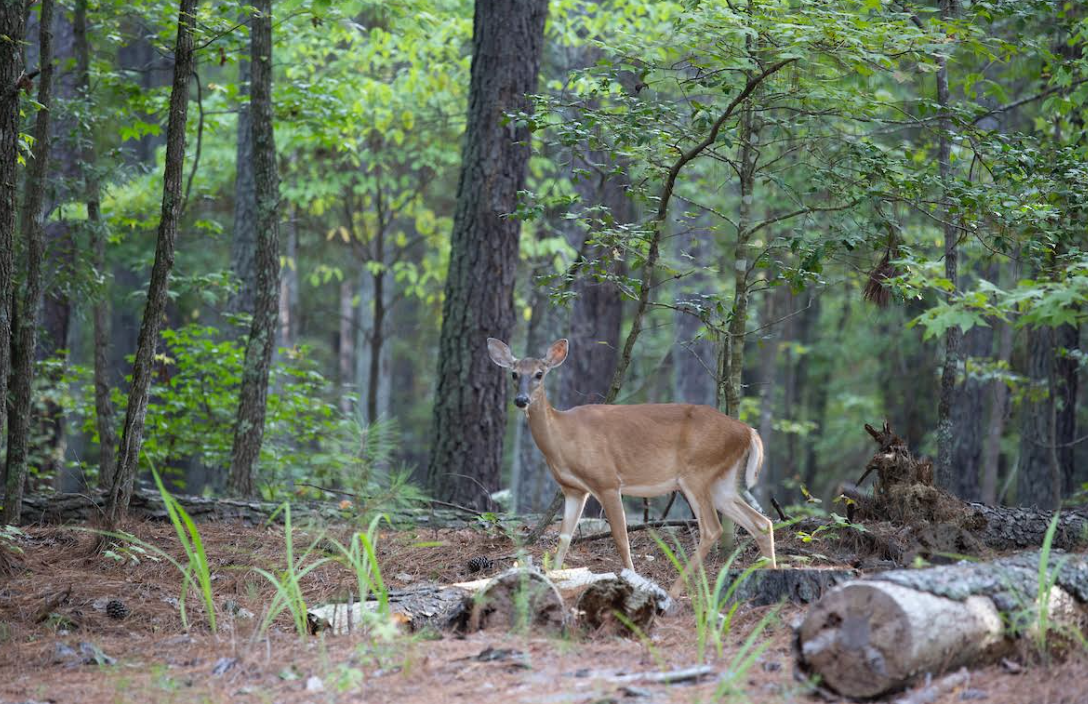
A white-tailed deer harvested in a northeastern North Carolina county popular for deer hunting has preliminarily tested positive for chronic wasting disease.
The North Carolina Wildlife Resources Commission on Tuesday reported the first presumptive detection of the disease in Edgecombe County on a 31/2-year-old male harvested by a hunter a few miles from the Pitt-Martin County line, according to a release.
The National Veterinary Services Laboratory is testing the sample to verify initial results. If that testing affirms those results, this would be the state’s 35th confirmed case of chronic wasting disease, or CWD, since 2022.
“We are certainly not happy to learn that we may have a new CWD infected area in the northeastern part of the state,” Wildlife Commission Game & Furbearer Program Assistant Chief Chris Kreh said in a release. “However, this is what our surveillance plan is designed to do — find areas where CWD is occurring as early as possible, so we can minimize its impact.”
Chronic wasting disease is a transmissible disease that afflicts deer, elk and moose and is always fatal. The disease spreads through infected body fluids, typically saliva, urine and feces, and the movement of infected carcasses and carcass parts.
During the early stages of infection, deer may appear healthy, so Wildlife officials urge hunters to take precautions when transporting or disposing of deer carcasses in an effort to minimize the spread of new infections of the disease.
Hunters in Edgecombe and surrounding counties are advised to keep whole deer carcasses and high-risk carcass parts in the county in which they harvested, or take them to a processor or taxidermist participating in the commission’s Cervid Health Cooperator Program for carcass disposal and test submission.
Hunters who kill game infected with CWD are advised not to eat the meat. To date, there has not been a reported case of CWD infection in humans.
Wildlife officials are asking hunters to submit deer harvested in Edgecombe and surrounding counties for testing. Hunters may use an interactive map for information on testing drop-off locations throughout the state.
Portions of carcasses that are not edible and not taken to a Cervid Health Cooperator should, when possible, be buried in the area the animal was harvested, double-bagged and disposed of in a landfill, or left on the ground where the animal was harvested.
Boned-out meat, caped hides, antlers and cleaned skulls, cleaned jawbones and teeth, and finished taxidermy products are safe to transport outside of Edgecombe County.
“We will continue, and potentially increase, our surveillance in this area and hopefully in a few years we’ll have a good understanding of how many deer are infected and how big the infected area is,” Kreh said.
The commission has collected and tested samples from nearly 3,000 deer for CWD in Edgecombe and surrounding counties during the past four years.
The closest confirmed case of CWD from this new suspected site is a little more than 90 miles away in Cumberland County.
Wildlife Resources Commission Management Division Chief Brad Howard said in a release that he did not expect this season’s hunting regulations or surveillance areas to change, regardless of the second test results. Any potential changes in Edgecombe and surrounding counties would be made during the 2026-27 deer hunting season.
“A mid-season regulation change would be very confusing,” Howard stated. “I’m confident our hunters can absorb this new information and help us take steps to increase our surveillance and awareness to the area.”

 Add to favorites
Credit: Original content published here.


